Fort Worth Foundation Fix is a veteran owned and operated referral and connection service. We help homeowners request a free foundation inspection and get introduced to a vetted local foundation contractor. We do not perform repairs ourselves, do not publish a fake office address, and do not claim a Google Business Profile we don’t operate. This guide is general education, not a diagnosis of your home.
Why DFW homes show foundation symptoms
Much of the Dallas–Fort Worth area sits on clay-rich soils with a high shrink-swell potential. When these clays get wet, they absorb water and expand; when they dry out, they shrink and can pull away from the foundation. North Texas weather makes that cycle hard to avoid: wet springs and fall storms followed by long, hot, dry summers. The movement is rarely even. One side of a house may sit in shade near a flower bed while another bakes in the afternoon sun, or a downspout may soak one corner while a large tree draws moisture from another.
That uneven movement—called differential movement—is what shows up inside and outside the home. A small amount of seasonal movement is normal on clay, and plenty of homes live with minor cosmetic cracking for decades. The point of knowing the warning signs is to notice patterns early, so you can get a professional opinion before a small problem grows.
Warning signs inside the house
- Doors that stick, swing on their own, or won’t latch. Especially telling when it changes with the seasons—tight after rain, loose after a dry spell.
- Uneven gaps around doors. A wedge-shaped gap at the top of a door frame often means the frame has racked out of square.
- Drywall cracks above doors and windows. Diagonal cracks running from the corners of openings are a common movement pattern.
- Sloping or bouncy floors. A marble that rolls consistently in one direction, or a floor that feels like you’re walking downhill toward one room.
- Cracked floor tile. Tile that cracks in a line across several pieces can reflect a crack in the slab below.
- Gaps at trim, cabinets, or countertops. Baseboards separating from the floor, crown molding pulling away, or cabinets leaving a gap at the wall.
- Windows that are hard to open or won’t lock. Frames out of square bind the sash.
Warning signs outside the house
- Stair-step cracks in brick or mortar. The classic North Texas pattern, often near corners, windows, and garage openings.
- Brick separating from window or door frames. A widening gap between the brick and the frame or trim.
- Cracks in the exposed slab edge or perimeter beam. Look along the visible concrete at the base of the walls.
- Gaps where the chimney, porch, or patio meets the house. Attached structures often move differently than the main foundation.
- Soil pulling away from the foundation. In dry months you may see a visible gap between the soil and the slab—a sign of clay shrinkage worth managing.
- Water pooling against the foundation after storms. Not damage by itself, but a common cause of it.
Pier-and-beam homes have their own signs
Many older Fort Worth neighborhoods have pier-and-beam foundations with a crawl space instead of a concrete slab. Common signs there include soft or bouncy floors, floors that dip toward the middle of the house, sagging near interior walls, shims that have shifted or crushed, standing water or high humidity in the crawl space, and wood rot on beams or sills. Our pier-and-beam repair page covers those in more detail. Slab homes are covered on our slab foundation repair page.
Cosmetic or structural? Patterns that matter
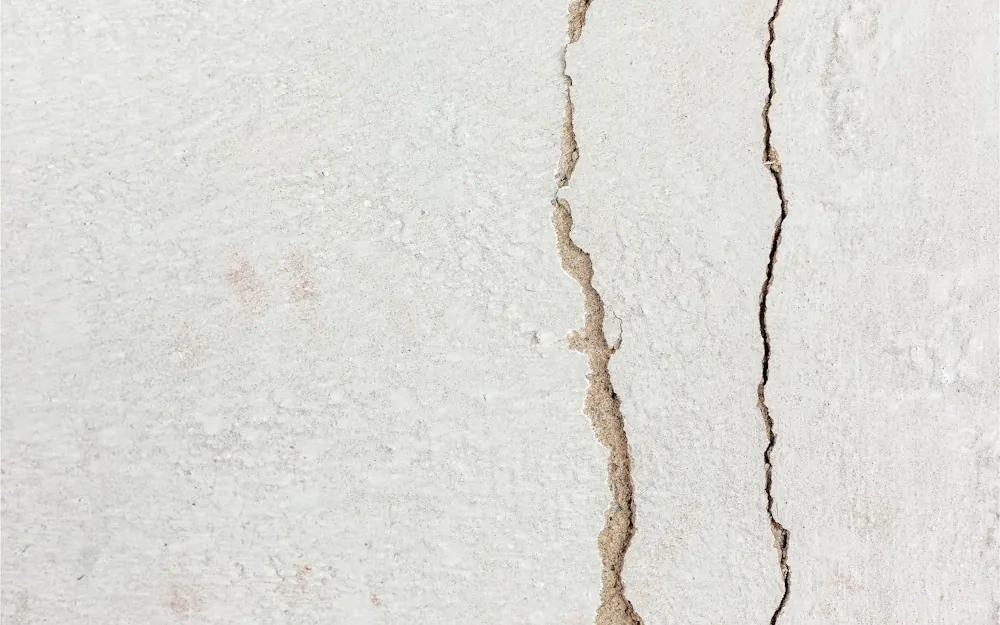
Not every crack is a foundation problem. Concrete shrinks as it cures, so thin hairline cracks in a slab or garage floor are common in homes of every age. Drywall tape joints crack from normal temperature and humidity changes. A single symptom on its own often isn’t cause for alarm. These patterns are more worth a professional look:
- Cracks that are getting wider, longer, or keep reopening after they’re patched
- Cracks where one side is higher than the other (vertical offset)
- Several symptoms clustered in the same area of the house—say, a sticking door, a drywall crack, and a brick crack all on the same corner
- Symptoms that appeared suddenly or got noticeably worse in a single season
- Signs of plumbing leaks, such as an unexplained jump in the water bill or damp spots on the floor
For more on reading cracks specifically, see our foundation crack repair guide. If floors are the main complaint, read about house leveling.
What you can track before an inspection
Take dated photos of cracks with a coin or tape measure for scale, and put a small pencil mark at each end so you can tell later if a crack has grown. Note which doors stick and in what months, plus any recent plumbing repairs or new landscaping. This doesn’t replace a professional evaluation, but it helps tell a long-standing cosmetic crack from active movement.
Simple habits that help on clay soil
Most of what you can do yourself is about keeping moisture around the foundation more consistent: keep gutters clear, extend downspouts several feet from the house, grade soil and mulch so water runs away from the slab, and keep sprinklers off the foundation. These habits won’t fix movement that has already happened, but they can reduce the swings that cause new symptoms.
When to request a free inspection
It’s a good time to get a professional opinion if cracks are growing or reopening, if several warning signs show up together, if floors have become noticeably uneven, if you’re buying or selling a home and want a clearer picture, or if you simply want peace of mind before deciding anything. Use the form on this page or our free inspection page, and we’ll connect you with a vetted local foundation contractor who can take readings and explain what they find. You’re never obligated to proceed with repairs.
Wondering what repairs can involve? Our Fort Worth foundation repair cost guide explains the variables that drive pricing. If anything looks like an immediate safety concern—a door you can’t open to get out, a sagging ceiling, or a gas smell—contact the appropriate emergency service or utility first.
FAQ
Are small cracks in my foundation normal?
Often, yes. Concrete shrinks as it cures, so thin hairline cracks in slabs and garage floors are common in homes of every age. Cracks that widen over time, reopen after patching, or have one side higher than the other are more worth having inspected.
Why do my doors stick after it rains?
On expansive North Texas clay, soil swells when wet and shrinks when dry. If that movement is uneven under the house, door frames can rack slightly out of square, which is why sticking doors often change with the seasons. It is one of the common early signs worth noting.
Does one warning sign mean I need foundation repair?
Not necessarily. A single symptom may be cosmetic. Several signs clustered in the same part of the house, or symptoms that are getting worse, are a better reason to get a professional evaluation.
How do I request a free foundation inspection?
Use the form on this page or the free inspection page. Fort Worth Foundation Fix is a referral service that connects you with a vetted local foundation contractor, who typically provides a free on-site inspection and estimate with no obligation to proceed.